June 17, 2009

Never Never Land

NewHaven1962.jpg

Why hello there. I seem to have fallen off the map again. Perhaps literally — ever had a dream where you found yourself someplace supposedly familiar yet completely alien?

In my dreams, New Haven, Ct. is incredible... filled with turn-of-the-century brick brownstones with curved windows and intricate wrought iron scrollwork, criss-crossed by cobblestone streets and curved byways. Better yet, the town centre opens out on a beautiful vista of open ocean (!), presided over by soaring skyships with crimson red sails.

Where did this steampunk-New-Haven-that-never-was come from, I wonder? (It certainly bore no resemblance to any parts of New Haven I've ever seen —what a resolutely charmless city.)

On a more quotidien note, my computer curled up its virtual toes and I've been trying to rebuild my music library. I stumbled across some old and new favorites in the process.

Dress Up As Natives I discovered on the Typical Girls mailing list. Don't know much about them, except that they hailed from early '80s Pittsburgh and played incredibly catchy, skewed art punk.

Rema Rema predated the Wolfgang Press and included Adam & the Ants' Marco Pirroni and Gary Asquith from Renegade Soundwave.

I do hope the Cramps need no introduction. This beautifully unhinged live performance is from the unreleased Urgh! A Music War soundtrack. R.I.P., Lux Interior.

MP3.jpgDress Up As Natives, “You Had to Be There"

MP3.jpgRema Rema, "Feedback Song"

MP3.jpg"The Cramps, "Tear It Up (Live)" (from Urgh! A Music War

IMAGE: NEW HAVEN TRAIN SCHEDULE, 1962

May 11, 2009

The Mysteries of No. 6 | An Interview with Terry Tolkin

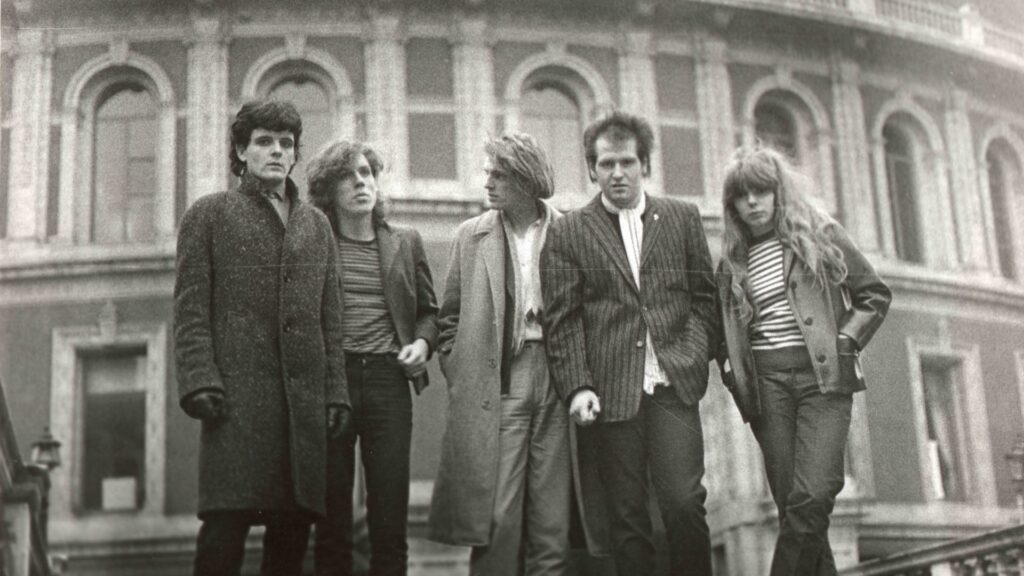
Terry+Dean.jpgThe story of Terry Tolkin’s record label, No. 6 Records, has been somewhat lost amidst the nostalgic hosannas for mid- to late-90s indie rock. A new compilation of No. 6’s 7-inch output, titled Speed Dating [No. 6], will hopefully change all that.

Speed Dating has the feel of a great lost mix tape. If you think about it, a 7-inch is basically a band’s thesis statement. Speed Dating captures that headlong rush of great pop ideas —the fizz and pop— many times over. Stylistically restless but aesthetically consistent, Speed Dating is also a reminder of a more innocent time, when a band could make its mark with an A-side and a record label’s careful connoisseurship still meant something.

Luna’s Dean Wareham once said of Terry, “You meet two kinds of people at major labels —those who live for music, and those who live off music. Terry lived for music.”

• • • • • • • • • • • • • • • • • • • • • • • • • • • • • • • • • • • • • • • • • • • • • • • • • •

PICTURED: TERRY WITH DEAN WAREHAM, 23RD ST. PHOTO COURTESY HOWARD THOMPSON

• • • • • • • • • • • • • • • • • • • • • • • • • • • • • • • • • • • • • • • • • • • • • • • • • •

Originally a Deadhead from New City in Rockland County, Terry’s musical paradigm was forever shifted in 1978 when he moved to NYC. Turned on to punk rock by his boyfriend, who ran a small record label, Terry was enlisted to take records around to Ed Bahlman’s influential 99 Records on Macdougal.

It didn’t take long for Bahlman to offer Tolkin a job. From there, he became involved with the day-to-day operations at the store and at Bahlman’s label, 99,* home to ESG, Liquid Liquid, the Bush Tetras and Glenn Branca, among others. At this time, he also started DJing and booking shows at NY venues like Danceteria.

It was the start of a career that would include A&R jobs at Touch & Go, Dutch East India Trading Co., Caroline, Rough Trade and Elektra, where he became VP of A&R from 1992 to 1996, signing Stereolab, Luna, the Afghan Whigs, Scrawl and Jennyanykind.

He started No. 6 in 1989, when he was at Rough Trade, and disbanded the label ten years and fifty releases later. During that time, he released records by Dean Wareham, Tindersticks, Cagney and Lacee (Dean Wareham’s band with his first wife, Claudia Silver), Ornament (an Afghan Whigs offshoot) and Unrest, among others.

No.6Logo.gifThe high-flying “alt-rock years” finally ended at Elektra in 1996 with a huge personnel shake-up. This was an incredibly dark time in Terry’s personal life as well —his apartment building collapsed and he lost everything in the resulting fire, including all the No. 6 masters and artwork, as well as his three cats and his record collection. (This period is covered in great detail in Dean Wareham’s memoir Black Postcards.) Terry currently lives on a farm, as far away as you can get from the insanity of NYC.

Terry chatted at length with me about the genesis of the label and his wayward adventures in the record industry.

INFLUENCES
At what age did you first get interested in music? What were some of the first bands to make a lasting impression on you?

My Mom says that I always liked and reacted to music. [My parents] spent a lot of time (and money) sending me to different music lessons on all kinds of instruments. It always ended the same way: "Terry just doesn't want to play music.” I remember performing in front of my family and at a couple of recitals and just hated being stared at!

I [went] to the same summer camp in upstate New York for 11 years from 1967 to 1978. My counselors were all Dead Heads and would go on weekends to see the Grateful Dead when they would play. At night they would load up the reel-to-reel and play their tapes of live Dead shows as we went to sleep. By the time I was 12 I knew the words to most of their songs and I still love and listen to them (up to and including 1979's Blues For Allah).

After Jerry Garcia started working on their movie and locking himself in an editing room with mountains of cocaine and heroin it all went downhill. But they remained an important influence on me throughout my "career.” For many years as a teen, the only records I owned were their albums and boxes of live tapes.

teenbeat_436_hires_1.jpgI grew up in New City, an upstate suburb of NYC. When I was 17 I moved into Manhattan on my own. I lived in a small studio above the Waverly Theatre in Greenwich Village. There were record stores all around me and I became friends with some of the employees.

That's when my music education really started to diversify. There was WNEW-FM in NYC. This was in the days when the DJs could play whatever they wanted, so it could be John Lennon then Bob Marley and then Elvis Costello all back-to-back. You would never hear that today. But the "Go-It-Alone" aesthetic of the Grateful Dead in their heyday still inspires me now.

When you first moved to NYC, you worked at the original 99 Records shop on Macdougal. 99 only released a handful of records over the course of its short history, each one of them reflective of owner Ed Bahlman’s impeccable ear. Working alongside Ed must have been an incredible learning experience.

Working with and becoming friends with Ed Bahlman was one of the most important relationships that I ever had. It was one of those relationships that sends your life pinging off into a completely different realm.

I went to the store every Friday after I got paid. Ed would be spinning records and a pile would start to develop. I always left by telling him that if he ever needed to hire someone that I would take the job. He worked at the store seven days a week and worked as a maintenance man at an Upper East Side condo building full time.

After about four months he asked me if I would start working there. I didn't even give notice at the office job I had been at for a year. I just started the next day. I went from making about $300.00 a week to $125.00. I didn't care. I thought I had the best job in the world.

Continue reading "The Mysteries of No. 6 | An Interview with Terry Tolkin" »

April 26, 2009

Underground USA/UK

beauty_becomes24.jpg Excerpts from some blog posts of interest this week.

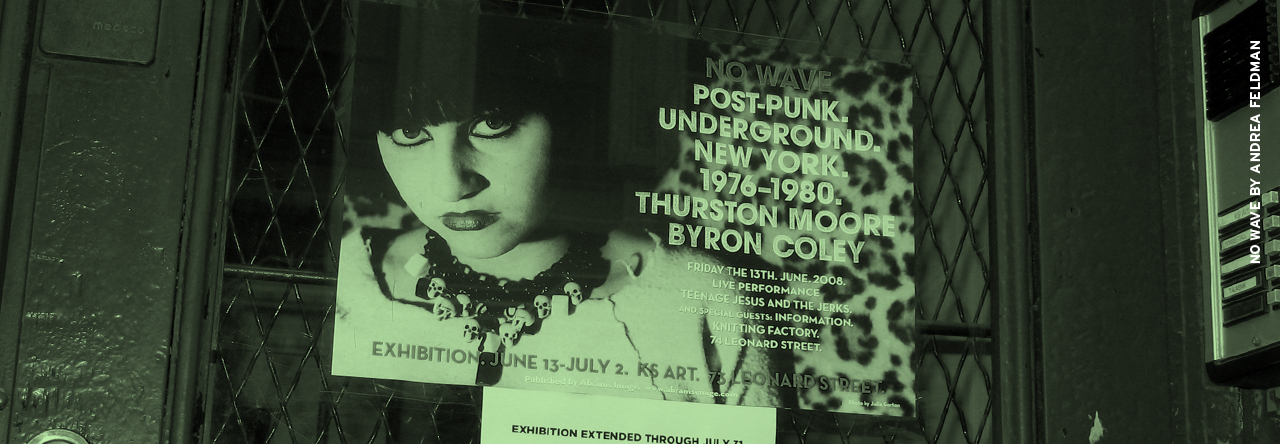
NYC Premiere for No Wave Cinema Doc Blank City
Dan Selzer [Acute Records]: A year or so ago some friends of mine asked me if I wanted to help out on this movie they were working on, a documentary focusing on the no wave cinema scene that emerged in NYC in the late 70s. I talked my way into becoming the “music supervisor” of their movie, Blank City, and began suggesting music to use.

I didn’t realize how serious the project was until I finally saw the rough cut, which was about 8 hours long. The film was beautifully shot, excitingly edited, masterfully directed —and covered so much more than just no wave cinema.

While the no wave film of the late 70s and the cinema of transgression of the 80s are the focal point, the movie goes further back to discuss influences in NYC and underground film, from Warhol and Jack Smith through the punk films of Amos Poe.

And in discussing the scenes, they paint a more expansive picture of the times, the artists, the musicians, the lifestyle. So while the focus is certainly on the movies that were made, the movie should interest anybody with an interest in that time period.
black box.jpg

• • • • • • • • • • • • • • • • • • • • • • • • • • • • • • • • • • • • • • • • • • • • • • • • • • • •
Simon Reynolds on Totally Wired, his new book of interview outtakes from Rip It Up and Start Again: I feel that music now has become a paradise that's become a hell. … Any young person can immediately drown themselves in virtually, absolutely everything. … And I don't know what kind of consciousness or creative consciousness can survive that kind of inundation. It feels almost like a cultural catastrophe.

I mean, obviously, sometimes it's great if I can, say, find some really obscure BBC Radiophonic thing that barely came out at the time but is up there on the web. But at the same time it seems to have gone wrong somehow. It's like getting everything you wished for as a music fan and it turning out to be a terrible nightmare.

• • • • • • • • • • • • • • • • • • • • • • • • • • • • • • • • • • • • • • • • • • • • • • • • • • • • • •

Jon Savage, author of England’s Dreaming, in conversation with Wilson Neate, author of the new 33 1/3 volume on Wire's Pink Flag: “We were trying to be stupid, but we weren't stupid — you know, we were just playing around with ideas of simplicity and earthiness, really.”

MP3.jpg”Black Box Disco” [from New York Noise Vol 2, Soul Jazz]

MP3.jpgBauhaus, “Third Uncle” [Brian Eno cover]

MP3.jpgDome, "Jasz" [Bruce Gilbert/Graham Lewis/Russell Mills/Angela Conway]

April 19, 2009

The Ecstatic Static

Stereolab1991.jpg

After 18 years and 11 albums, Stereolab have gone on the dreaded "hiatus," according to a post from longtime band manager, Martin Pike: “As we recently made #51 with Emperor Tomato Ketchup in the Amazon 100 Greatest Indie Rock Albums of all Time, we feel that our work is done for the moment.”

While I was saddened to hear about the hiatus, I was hardly shocked. The law of diminishing returns had most definitely begun to set in some time ago. And, after nearly 18 years, could you blame them?

During their lengthy career, consistency had been the group's bugbear. Somewhere along the line their endlessly optimistic, faux-naïf approach to experimentation (a playful, fling-it-at-the-wall, see-if-it-sticks methodology) ossified into a kind of pleasant, tasteful aural wallpaper.

Maybe they started to lose me sometime around 1997’s Dots and Loops. When they left their home turf and took up residence with the Tortoise noodlers, things started to go slightly awry.

Not fatally so, mind you, but from that point onwards their music slowly lost the charmingly rough-hewn quality that made their early, occasionally strident locked-groove lullabies so compelling. Songs like “Brakhage” and “Refractions in the Plastic Pulse” were complex, jazzier, more playful —even airy. But with the new looseness came a certain aloofness, too. Without that central core of very human tension, it was inevitable that the center would not hold.

And it had been that way for quite some time.

I prefer to think about all the great moments they’ve had throughout the years: the marvelous singles (especially the one-offs), live shows and deliriously playful videos.

My fondest memory of the ‘lab is a secret Christmastime show they played at the Camden Irish Centre in 1994. Disco Inferno, Cornershop, Moonshake and Pram opened. (Talk about an amazing lineup! Never been topped since.)

They closed with a blissful 20-minute long version of “Contact” that had the audience levitating as one. One nation under a groove, indeed. At their best, Stereolab could hit that sweet spot of harmonic convergence like no other band.

I interviewed Tim and Laetitia for Warped Reality in 1995, right before the group left for Lollapalooza. Some highlights...

Continue reading "The Ecstatic Static" »

March 29, 2009

Trial by Fire | Anthony Bourdain

Bourdain2.jpg

Anthony Bourdain
Johnson & Wales University
March 18, 2009

Chef, author and culinary adventurer Anthony Bourdain certainly relishes his role as the bad boy of the culinary world. Striding across JWU's Xavier stage in head-to-toe black, he was greeted by thunderous applause from the sold-out crowd of more than 500 students. Warming to their enthusiasm, the hyperkinetic Bourdain proceeded with a largely off-the-cuff hour-long talk peppered with pithy, loose-limbed observations and rapid-fire, expletive-laden asides.

And yet, despite this penchant for brutal — if not downright slanderous — honesty and decidedly prickly exterior, the most surprising aspect of his talk was that it revealed him to be a practical and even reflective observer of food culture and human behavior.

Which is not to say that the bad boy persona is all for show. Bourdain definitely walks it like he talks it. Having gone through some very dark times (as unsparingly related in his autobiographical exposé, Kitchen Confidential), he emerged with the hard-won wisdom of someone who’s seen (and been through) it all. As he wrote in Spin, “We had fun for a while, then we all ended up dead or in a methadone program.”

When asked by a well-meaning student whether he thought of himself as a role model for young culinarians, Bourdain could not have been clearer: “Please God, no. Do not do as I do!” Pause. “Have you read the book?”

After the laughter died down, he continued: “Certainly my culinary career was not one that any of you would want to emulate. I’ve spent a lot of time …making some really crappy food at some soul-destroying places.”

Those “soul-destroying places” indoctrinated the young Bourdain into the dysfunctional but unshakable solidarity forged in the anarchic heat of the professional kitchen. Calling it the “last refuge of the misfit,” he noted that cooks are able to say things to each other that, in the real world, would result in a lifetime of litigation. “If being called a goldfish dropping bothers you, you don’t belong in the kitchen. You can’t mind injustice and absurdity.”

BourdainPortrait1.jpg

Bourdain also summarized the many schools of culinary leadership, most of them involving Gordon Ramsay-like levels of yelling, screaming and intimidation, all delivered with a drill sergeant’s colorful vocabulary and martial sense of justice. “They don’t call it ‘the Brigade’ for nothing.” While the people who didn’t belong were “shaken out like antibodies,” those who stayed behind had each other’s back, no matter what.

Surprisingly, though, Bourdain characterized the worst moments in the kitchen as “not when there’s chaos and screaming but dead silence,” therefore signifying some fuck-up on an unprecedented scale.

While the subjects of Bourdain’s withering ire are legendary (Rachel Ray and her telegenic ilk; his former bosses at the Food Network; Billy Joel), his praise is doled out sparingly enough that you know it’s genuine. He singled out David Chang, the innovative chef-proprietor of the growing Momofuku empire, as “one of the most important chefs out there.” “His food is devoid of bullshit, it’s unfussy, and [most of all], it’s fun.” He also praised Chang’s realistic sense of scale and lack of pretension, two qualities guaranteed to serve him (and like-minded chefs) in good stead in the new economy. “Bullshit will be the first to go,” he noted.

He also praised the Travel Channel's unwavering support for his globe-trotting culinary adventure show, No Reservations, now in its sixth season. "I have so much creative freedom with the show. I decide where we go, I get to travel with good friends, and I decide which films we get to rip off."

When asked about whether Julia Child was a formative influence, he turned uncharacteristically serious. “She is easily the most influential person in American cooking. Without her, we’d still be grilling ham steaks with pineapple rings and maraschino cherries. And she never once endorsed a single product.” Huge cheers.

Ultimately, he made it clear that food should be thought of as not simply an aesthetic but also a deeply sensual experience. "Chefs are in the pleasure business. The real artistry of cooking is turning something unlovely and tough into something new, that transformation." He added, "If you don't like sex or music you're not going to cook well."

His final words of advice to young cooks just starting out? “There’s no way to learn how to cook if you don’t venture outside your comfort zone. So travel, eat wildly, and fear not if it’s something strange.”

PHOTOS BY ANDREA FELDMAN

CONTESTS

NoWaveWin.gif CLOSED

Links

4AD
20JazzFunkGreats
Absolute Classic Masterpieces
Acute Records
The Acute Records Blog
Alice Bag :: Diary of a Bad Housewife
Angels Twenty
Mike Appelstein
AS220
Bardot A Go Go
BananaNutrament
Blast First (petite)
The Blonde Oracle of Delphi
Bonton
Book Design Review
Brainwashed
Bricolage Fantasy
Charles Hayward [This Heat/Camberwell Now/etc.]
Critique of Pure Reason
Covert Curiosity
Danielle Dax
Dave Allen [Gang of Four]
Delusions of Adequacy [webzine]
Dial [band site]
Diana Senechal
The DIY Rockstar
hey, Drag City
Drink Me
Elisabeth Vincentelli
Exact Change
Firepile [Robin]
Floodwatchmusic
Franklin Bruno | Nervous Unto Thirst
Gang of Four
Hallmonitor/12"x12" [Album Art Blog]
Hard Format (Music Design + the Sublime)
Her Jazz
His Name Is Alive
I Guess I'm Floating
I'm Just Sayin' Is All...
Invisible Limb
I Rock Cleveland
Karmasuck.org
John Bagnall's Retreat
Lakuna Design
Leslie Winer (c)
Lida Husik
Machines With Magnets [Pawtucket RI Gallery]
Mairead Case
No Wave [Marc Masters]
Noise Week [Marc Masters]
Mark Sinker
My Mean Magpie
New York Night Train
North Fork Sound
OSCARR | Optimo Singles Club
PogoPrincess
The Man Who Couldn't Blog
The Original Soundtrack
The Peer
Raven Sings the Blues
Rykarda Parasol
Shake Your Fist
Said the Gramophone
*SixEyes
The Slits
Speed of Dark
The Stingler
Stop Loving Everything
Verse Chorus Press
The Valerie Project
Throwing Music/Kristin Hersh
Tangents.co.uk
The World's A Mess
The 1-2-3-4.com / Kinda Flipped Out There for a Second
Too Pure
Underneathica
Universal Hall Pass
UT [via the Wayback Machine]
UT
Well-Rounded Radio
What We Want Is Free [Layla]
Winged Avenger

About Warped Reality

The Sound Your Eyes Can Follow

amfeldman's Profile Page