
Author: andrea Page 49 of 72

Unrepentant Anglophile, a music obsessive with a fetish for luxuriously packaged objects, and an armchair traveler.

Spleen & Ideal

nakahira_01_300dpi

Dean & Britta
Museum of Fine Arts, Boston
The Victoria Lucas & the Nightingales
Abbey Lounge, Cambridge
March 9, 2006

Last Friday night I had one of the most satisfying evenings of music I can remember. I came very close to going to THREE shows (sorry, Holly Golightly —maybe next time), but in the end settled for two: Dean & Britta at the Museum of Fine Arts’ august Remis Auditorium, and the Nightingales in Inman Square’s decidedly less august Abbey Lounge.

While I greatly enjoyed Friday night’s Dean & Britta show, they surprised me by being strangely unemotional performance-wise. I mean, here they are, a married couple, playing a well-seasoned mix of originals and covers —most of which have a languorous, decadent (even louche) vibe. By and large the songs are overheated tales of love at first sight, of desire striking with thunderbolt force. So why the aloof tone? The band picked up the slack with some bold, even humorous touches (like the thunderous melodica during the joyous cover of Lee Hazlewood’s “You Turn My Head Around”) but there was a marked lack of interaction between Dean and Britta. The seeming absence of intimacy was made all the more glaring given the emotional intensity of the lyrics. It didn’t ruin the performance, but it dimmed the aura of music’s lush flirtatiousness just a bit.

While the show may have been lacking in true duets, both Dean and Britta’s voices were in fine form. Britta’s voice especially sounded honey-sweet yet powerful, with just the right touch of huskiness to keep it from cloying. As always, Dean’s eloquent, nimble guitar stood front and center, that slightly wry post-Velvets strum-und-twang hitting a sweet spot somewhere between laconic jangle and insistent psychedelia.

There was a Steve Holt! look-alike in the front row who shrieked uncontrollably every time Dean played even a vaguely Luna-ish chord. Thankfully he didn’t pass out when the time came for a Galaxie 500 tune (or, more specifically, a Jonathan Richman cover that Galaxie had covered back in the day).

Flitting from the elegant reserve of the MFA to the dingy, dimly-lit hole-in-the-wall charm of the Abbey Lounge, we arrived just in time for the last few songs by New York-based The Victoria Lucas, who impressed me thoroughly by totally rocking a theremin solo during their raucous finale.

I’d been warned that Nightingales leader Robert Lloyd could be incredibly mercurial, and I was more than a little worried we’d be catching the band on an off night. (This after hearing that their NYC-area shows had been consistently incendiary.) Well, I needn’t have bothered, because from the moment Lloyd stepped in to the spotlight on that tiny stage, there was no let-up. Thankfully the band was more than up to the task of keeping up with his funny, self-deprecating, always splenetic brand of rat-at-at talk-rant (stylistically more cohesive than Mark E Smith’s, but with the same level of lacerating bile). They alternated easily between locked-groove jangle and more caustic guitar workouts —former Prefect Alan Apperley was well-matched with relative newcomer, guitar wunderkind Matt Wood. Drummer and percussionist Daren Garatt (ex- of Pram) was amazing to watch —when he came offstage I was surprised to see that he didn’t, in fact, have eight arms. Alas, we did not get “Here Come the Warm Jets” on kazoo (or the Hawkwind cover —for that I am thankful!) but with originals played with such joyous verve, they were hardly missed.

Spotted: Mark Robinson, head-bobbing along with aplomb. Also, ubiquitous Boston scenester Billy Ruane made it to both shows. He’s an inspiration.

Dean & Britta | The Victoria Lucas | The Nightingales |

MP3The Nightingales, “Lions on the Prowl”

MP3Dean & Britta, “Words You Used to Say”

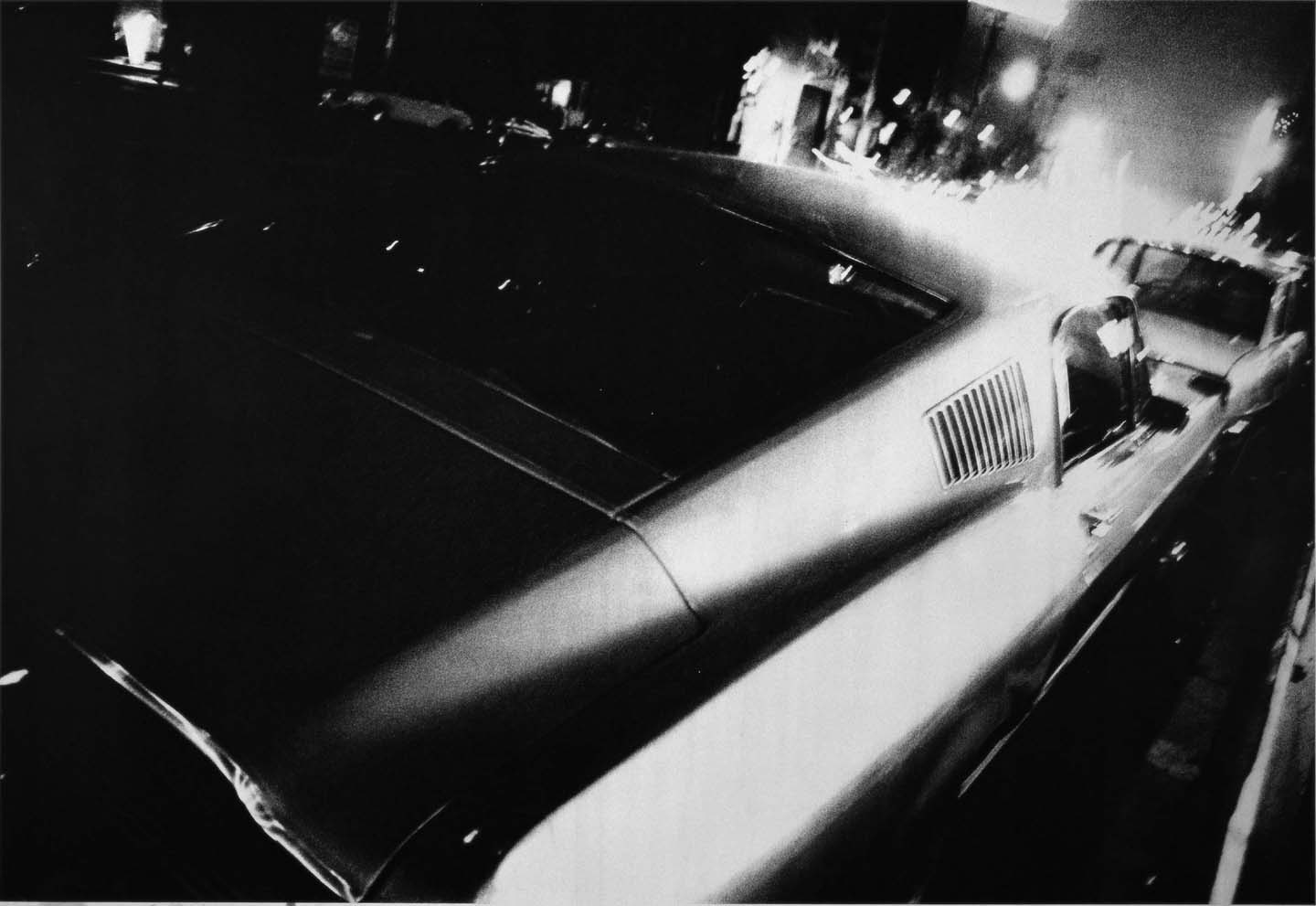
PHOTO BY TAKUMA NAKAHIRA [circa 1969]
the air is on fire

Lynch_AirCrop

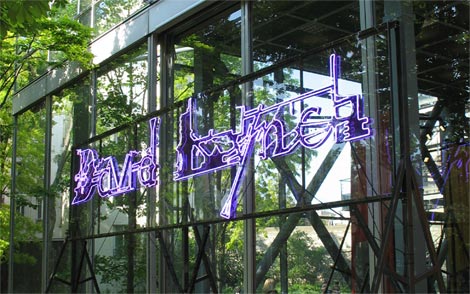
David Lynch is a very strange man. That’s never been said before, has it? Probably not. Anyway. I recently had the delightful (if disorienting) pleasure of seeing his exhibition of paintings, short films and ephemera at Paris’ Foundation Cartier. And my impression that he is a very strange man has not been budged one whit.

Lynch certainly subscribes to André Breton’s famous dictum from Nadja that “beauty will be convulsive or not at all.” His work consistently aims for the quease-inducing, but nevertheless gripping, fine line between the sacred and the profane, the ecstatic and the horrifying. There’s often a poetic quality to even the most nightmarish of his visions and, as such, it’s hard to dismiss even his most seemingly tossed-off or ridiculous ramblings because there’s usually a kernel of emotional truth there. (Or, at least, so I kept telling myself through the entire twisty last half of the sublimely ridiculous, often terrifying Mulholland Drive. Note to self: going to Lynch’s films alone is a BAD IDEA.)

The Fondation Cartier show certainly vacillated between the beautiful, the brilliant, and the resoultely half-baked. But, between the puerile, violent and scatologically-fixated Dumbland films, the viscerally ugly large-scale paintings (thick with impasto and decaying organic material), the eerie black-and-white shots of half-forgotten industrial wastelands and a series of luridly Technicolor pin-up shots, the show pretty much added up to a catalogue of all of Lynch’s varied obsessions. (All this and you could buy a pound of his signature coffee in the gift shop! I wonder if it makes you hallucinate the Red Room and talk backwards if you drink enough of it?)

The show included a surround-sound soundtrack, overseen by Lynch, to enhance that peculiarly Lynchian feeling of unease. Creaks, groans, and random bumps-in-the-night surrounded us as we went through gallery after gallery, giving each room a disquieting funhouse-after-dark quality. I would expect nothing less from the proven master of unease.

While in Paris I made a pilgrimage to painfully pretentious boutique Colette to look for music. On a whim I picked up Klima’s debut album. The alter-ego of French singer Angèle David-Guillou, aided and abetted by members of Piano Magic and Laika, the album is a playful, at times haunting song-set that calls to mind the wistful retro-futurism of Björk and the collagist temperament of singer-songwriters like Edison Woods. Seen in an, ahem, Lynchian context, you can almost picture her singing out at the empty roadhouse on a stormy night, her tempest-tossed voice carrying out over the treetops and the empty, forlorn road, and the traffic lights swaying in langorous time to the music.

Fondation Cartier | David Lynch | Peacefrog [Klima’s label]

MP3a href=”http://warpedrealitymagazine.com/Track07.mp3″>David Lynch“The Air Is On Fire” (Track 7 of Sound Installation) [2007]

MP3Klima, “Why Does Everything Have To End?” [2007]

PHOTO BY ANDREA | PARIS, MAY 2007

bonjour, tristess(a)

Angela Carter was a feminist in the guise of a fabulist. Fabulists are often dismissed as stylistic toe-dippers, as though speculative forms of fictional inquiry aren’t as valid as any other. (Really, isn’t ALL fiction speculative, when you get right down to it?) What made Angela Carter’s work so singular and potent was the way that she slyly and wittily worked through her own complex philosophical inquiry into the ever-shifting power struggle between the sexes, the rightful place of women in the world, and even her own internalized misogyny. Along the way, she subverted familiar tropes (her early novel “The Passion of New Eve” reads like a Technicolor post-apocalyptic satire as imagined by the bastardized offspring of Jack Smith and Shulamith Firestone) and rehabilitated fallen (and in some cases forgotten) anti-heroines like Lizzie Borden, Baudelaire’s mistress Jeanne Duval —even de Sade’s Justine. For all her verbal and visual pyrotechnics (she was, and is, an unparalleled prose stylist), throughout her career she remained, at heart, a humanist, and all her characters —even the most seemingly villainous— are rendered with a painterly sympathy. Reading between the lines of her short stories, novels, and journalistic pieces, one is drawn in to a singularly intimate conversation with Carter.

basd1Since it’s Blog Against Sexism Day, it seemed fitting to write a tribute to Carter’s unique body of work. Revered in England, she never really gained a foothold in the US outside of academic circles. Since her untimely death in 1992 I fear that she’s been largely forgotten here. And that would be a shame, because she fearlessly (and sometimes contradictorily) engages in all sorts of issues that are still engaging us. Her book-length conversation about pornography, The Sadeian Woman, still stands as one of the most original takes on the topic; Carter engages this complex, personal and thorny issue from all sides. In her most satisfying novel, Nights at the Circus, a freewheeling mille-feuille, the eternal “Nature or Nurture?” debate is given a sly twist. Fevvers, the protagonist, is, at least initially, a fairly ambivalent figure: both a proud Nike and a commodified creature of the freak-show, marginalized and gawked at. While the novel is incredibly complex —at once a bawdy, rollercoaster ride and a tall-tale not easily summarized— it is at heart about the heroine’s long, complicated journey towards making her own place in the world.

May we all fare as well.

I leave you with the late Grant McLennan and Steve Kilbey’s heartfelt tribute to Angela Carter, recorded as part of their long-running Jack Frost collaboration.

For more information on Angela Carter, visit the unofficial Angela Carter home page. | Jack Frost. |Blog Against Sexism Day/ | Buy Angela Carter books at Amazon. (Or better yet, ask for them at your local independent bookseller.)

MP3Jack Frost, “Angela Carter”

PHOTO BY FRANCESCA WOODMAN

Page 49 of 72

Powered by WordPress & Theme by Anders Norén